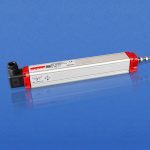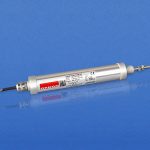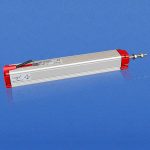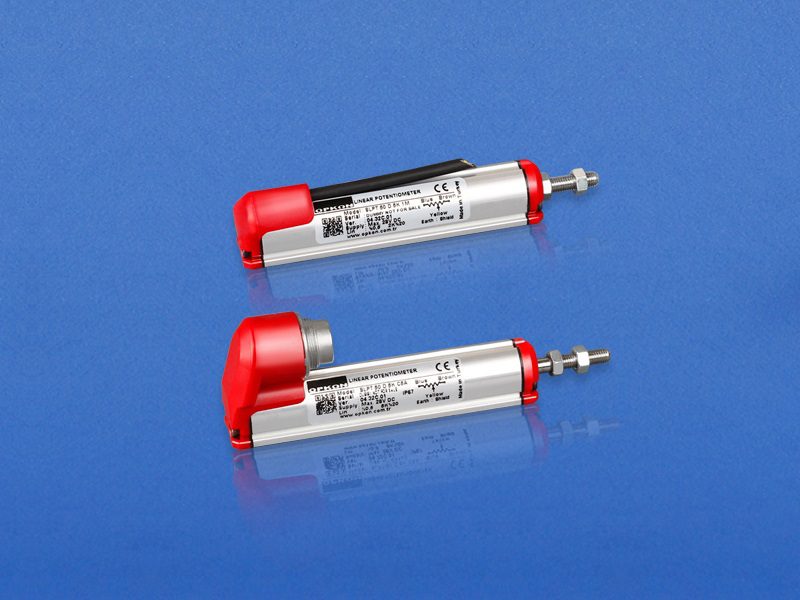
Part no.: SLPT
• Measuring range 10 - 400 mm
• Long mechanical life 100 million movements
• Excellent repeatability <0.01 mm
• 2 kOhm: 10 ... 50mm, 5 kOhm: 75 ... 400mm
For thirty years Opkon potentiometers have offered an economic and reliable sensor option to control engineers. With a simple ratiometric output, Opkon potentiometers can easily be integrated into existing applications and OEM projects alike. Alternative to Novotechnik TEX ‘rod type’ and Gefran PA1 series sensors.
"*" indicates required fields
Opkon
Opkon
Opkon
Opkon
Custom-Off-The-Shelf: The New ‘COTS’ Goods
For decades there has been an initiative to source COTS (Commercial-off-the-shelf) goods when possible, and for good reason. COTS goods generally are less expensive, more readily available and easier to dual source.
Seeing Is Believing: POSITAL 3D drawings now available for millions of encoders
POSITAL’s product finder has generated full specification custom datasheets for years. Rather than having to guess on specifications from a confusing product configurator, POSITAL provides part specific datasheets in real time for the given part number of interest.
Inductosyn: End of an Era, New Opportunities or Both?
Recently, obtaining the Inductosyn and components for maintenance has become more difficult. For decades the Inductosyn from Farrand Controls / Ruhle Companies sat near the top of the rotary sensor hierarchy. Providing sub 2 arcsec (0.5 mdeg) accuracies, it combined the robustness of a resolver with the performance of the best optical encoders. Despite its shortcomings, it found plenty of customers, from airborne infrared and radar systems, to telescopes, satellite communication antennae (SATCOM), machine tooling and low-pressure vacuum chambers.
Torque Measurement with Angle Sensors
As collaborative robots expand into manufacturing environments the issue of safe motion continues to be a concern. Current design approaches involve adding force sensors, torque sensors, and sometimes proximity sensors. These adders along with more complex software control algorithms mitigate most of the concerns and result in slower operation. Unfortunately, these additional sensors also add significant cost and complexity.