
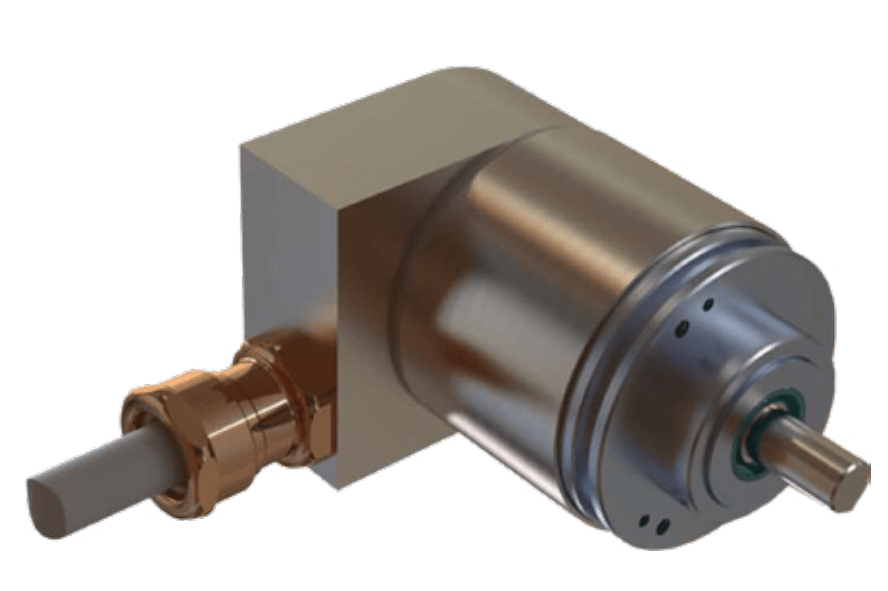
POSITAL’s UL rotary encoders for hazardous environments offer users mutliple user interfaces and mounting options at an economical price point are complicated machines which must perform flawlessly under the harshest conditions.

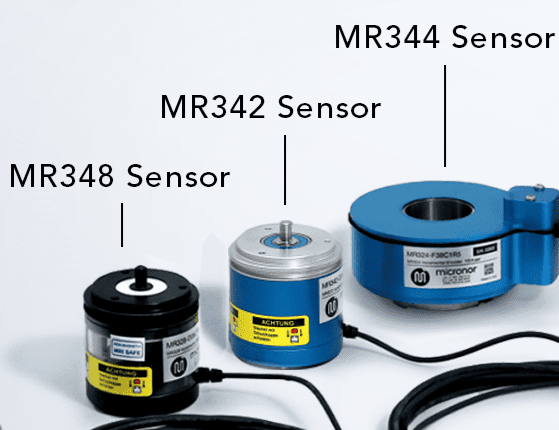
The MR348 series Fiber Optic Incremental Sensor is an entirely passive, non-metallic incremental rotary encoder designed for use in Magnetic Resonance Imaging (MRI), functional MRI (fMRI), nanomagnetic detection, EMC test labs, and similar applications where immunity and transparency to electromagnetic fields is required.

The MR341 Mini Rotary Encoder is a Size 11, small form factor incremental encoder offering resolution to 512ppr. It is inter-mountable with resolvers, synchros and conventional electronic-based encoders of the same size. The MR341 Encoder is a 100% passive sensor which operates entirely in the optical domain. The sensor provides immunity to any electro-magnetic interferences such as lightning, radiation, magnetic fields and other harsh environment conditions. The innovative design provides 100% electrical isolation as well as immunity to high voltages ideal for harsh environment applications such as feedback for welding robots, measuring anode position in smelters, and monitoring pantograph operation in electric rail applications.

The MR343 non-metallic construction makes the sensor entirely MRI safe, being both immune and invisible to magnetic fields.

The MR342W series ZapFree® Fiber Optic Incremental Sensor is an entirely passive, intrinsically safe, fiber optic incremental rotary encoder mounted on a draw wire module ideal for a wide range of harsh and hazardous environmental linear position applications.

The MR342 series ZapFree® Fiber Optic Incremental Sensor is an entirely passive, intrinsically safe, fiber optic incremental rotary encoder ideal for a wide range of harsh and hazardous environmental applications. The passive, all-optical Sensor connects to the remote Controller via a standard duplex 62.5/125 multimode optical fiber link. The remote MR340 Controller Module transmits and converts optical signals to/from the Sensor. The Controllers multiple built-in interfaces insure compatibility with industry standard motor drives, PLCs, quadrature counters, and motion control system.

The MR341 Mini Rotary Encoder is a Size 11, small form factor incremental encoder offering resolution to 512ppr. It is inter-mountable with resolvers, synchros and conventional electronic-based encoders of the same size. The MR341 Encoder is a 100% passive sensor which operates entirely in the optical domain. The sensor provides immunity to any electro-magnetic interferences such as lightning, radiation, magnetic fields and other harsh environment conditions. The innovative design provides 100% electrical isolation as well as immunity to high voltages ideal for harsh environment applications such as feedback for welding robots, measuring anode position in smelters, and monitoring pantograph operation in electric rail applications.
The MR340-1 DIN Rail Mount Controller is the active optical and electrical interface for the MR340 Series ZapFREE Fiber Optic Incremental Encoder System. The system is an innovative all-optical design immune to any electromagnetic interferences such as magnetic fields, lightning, voltage, and other harsh environment conditions.
As the incremental code passes through an MR34X Sensors internal optical pick-up, the phase output of two
light beams creates the classical A/B quadrature signals accessible via the controllers electrical interface.
The controller keeps track of position and also calculates the RPM and speed of the connected encoder Both position and speed can be read via RS485 Modbus RTU serial interface, USB, SSI or analog output. The analog output can be configured for either ±10V or 4-20mA output.

The MR430 series ZapFREE® Fiber Optic Position Sensor is a small form factor, rotary position sensor with 13-bit, single-turn resolution.
The MR430 features an innovative design which enables new applications and OEM product features not formerly possible with electronics-based sensors.
The sensor is 100% passive and is unaffected by EMI, RFI, microwaves and magnetic fields. The innovative, alldielectric design also provides 100% electrical isolation and immunity to high voltages & lightning.

Intrinsically safe H603 is CSA approved for use in potentially explosive dust and gas/vapour atmospheres. The H603 is designed for industrial and scientific feedback applications and is ideal for OEMs seeking good sensor performance for arduous applications in hazardous areas.
The H603, like all Positek® sensors, is supplied with the output calibrated to the angle required by the customer, between 15 and 160 degrees and with full EMC protection built in. The sensor provides a linear output characteristic with angle of deflection. There is a machined registration mark to identify the calibrated mid point.
Overall performance, repeatability and stability are outstanding over a wide temperature range. Electrical connections to the sensor are made via an industrial standard 4-pin M12 connector, with limited rotational capability to facilitate cable routing.
The sensor has a rugged stainless steel body. The flange has two 4.5mm by 30 degree wide slots on a 48mm pitch to simplify mounting and position adjustment. Environmental sealing is to IP67.
Positek intrinsically safe sensors are designed to be used with a galvanically isolated amplifier . Approved galvanic isolation amplifiers (G005) are available from Positek; there is a choice of 0.5-9.5V or 4-20mA transmission outputs.
The sensor can be installed with a cable length up to 1km between the sensor and the amplifier.
The intrinsically safe M603 is ATEX and IECEx approved for use in potentially explosive gas/vapour, dust atmospheres and mining environments.
It is designed for industrial and scientific feedback applications and is ideal for OEMs seeking good sensor performance for arduous applications in hazardous areas.
The M603, like all Positek sensors, is supplied with the output calibrated to the angle required by the customer, between 15 and 160 degrees and with full EMC protection built in. The sensor provides a linear output characteristic with angle of deflection. There is a machined registration mark to identify the calibrated mid point.
Overall performance, repeatability and stability are outstanding over a wide temperature range. Electrical connections to the sensor are made via an industrial standard 4-pin M12 connector, with limited rotational capability to facilitate cable routing. The sensor has a rugged stainless steel body and mounting flange. The flange has two 4.5mm by 30 degree wide slots on a 48mm pitch to simplify mounting and position adjustment. Environmental sealing is to IP67.
Positek intrinsically safe sensors are designed to be used with a galvanically isolated amplifier . Approved galvanic isolation amplifiers (X005) are available from Positek; there is a choice of 0.5-9.5V or 4-20mA transmission outputs.
The sensor can be installed with a cable length up to 1km between the sensor and the amplifier.
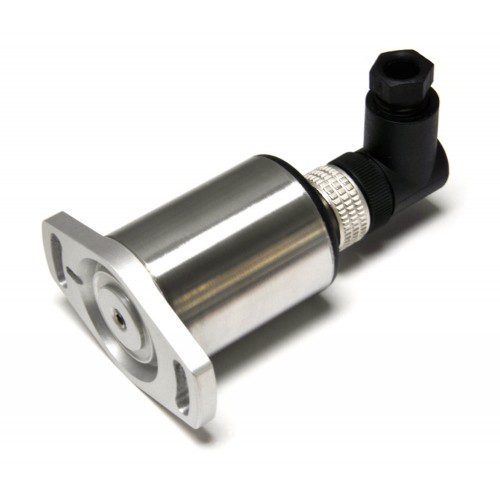
The intrinsically safe X603 tilt sensor is ATEX and IECEx approved for use in potentially explosive gas and vapour atmospheres. It is designed for industrial and scientific feedback applications and is ideal for OEMs seeking a high accuracy tilt sensor for demanding applications in hazardous areas.
The X603, like all Positek sensors, is supplied with the output calibrated to the angle required by the customer, between 15 and 160 degrees, and with full EMC protection built in. The tilt sensor provides a linear output characteristic with angle of deflection. There is a machined registration mark to identify the calibrated midpoint.
Overall performance, repeatability, and stability are outstanding over a wide temperature range. Electrical connections are made via an industrial-standard 4-pin M12 connector, with limited rotational capability to facilitate cable routing.
The sensor has a rugged stainless steel body and anodized aluminium mounting flange. The flange has two 4.5 mm by 30-degree-wide slots on a 48 mm pitch to simplify mounting and position adjustment. Environmental sealing is rated to IP67.
Positek intrinsically safe tilt sensors are designed to be used with a galvanically isolated amplifier. Approved galvanic isolation amplifiers (X005) are available from Positek, with a choice of 0.5–9.5V or 4–20mA transmission outputs.
The sensor can be installed with a cable length of up to 1 km between the sensor and the amplifier.
Intrinsically safe G603 is CSA approved for use in potentially explosive gas/vapour atmospheres. The G603 is designed for industrial and scientific feedback applications and is ideal for OEMs seeking good sensor performance for arduous applications in hazardous areas.
The G603, like all Positek® sensors, is supplied with the output calibrated to the angle required by the customer, between 15 and 160 degrees and with full EMC protection built in. The sensor provides a linear output characteristic with angle of deflection. There is a machined registration mark to identify the calibrated mid point.
Overall performance, repeatability and stability are outstanding over a wide temperature range. Electrical connections to the sensor are made via an industrial standard 4-pin M12 connector, with limited rotational capability to facilitate cable routing.
The sensor has a rugged stainless steel body. The flange has two 4.5mm by 30 degree wide slots on a 48mm pitch to simplify mounting and position adjustment. Environmental sealing is to IP67.
Positek intrinsically safe sensors are designed to be used with a galvanically isolated amplifier . Approved galvanic isolation amplifiers (G005) are available from Positek; there is a choice of 0.5-9.5V or 4-20mA transmission outputs.
The sensor can be installed with a cable length up to 1km between the sensor and the amplifier.

The intrinsically safe H130 is CSA approved for use in potentially explosive gas/vapour and dust atmospheres. It is designed for demanding hydraulic or pneumatic cylinder position feedback applications where service life, environmental resistance and cost are important and is ideal for OEMs seeking good sensor performance for arduous applications in hazardous areas.
Overall performance, repeat-ability and stability are outstanding over a wide temperature range. The unit is highly compact and space-efficient, being responsive along almost its entire length. Like all Positek sensors, the H130 provides a linear output proportional to displacement. Each unit is supplied with the output calibrated to the travel required by the customer, from 0-400mm to 0-1485mm and with full EMC protection built in.
The sensor is very rugged, being made of stainless steel with an inert fluoropolymer-sheathed probe and stainless steel target tube. The sensor is easy to install in cylinders and has a wide range of mechanical options. Environmental sealing is to IP65 or IP67 depending on selected cable or connector options.
Positek intrinsically safe sensors are designed to be used with a galvanically isolated amplifier . Approved galvanic isolation amplifiers (G005) are available from Positek; there is a choice of 0.5-9.5V or 4-20mA transmission outputs.
The sensor can be installed with a cable length up to 1km between the sensor and the amplifier.

The intrinsically safe H118 is CSA approved for use in potentially explosive gas/vapour and dust atmospheres. The H118 is designed for a wide range of industrial applications and is ideal for OEMs seeking good sensor performance in situations where a short-bodied sensor is required for operation in hazardous areas. The unit is compact and space-efficient, being responsive along almost its entire length, and like all Positek® sensors provides a linear output proportional to displacement. Each unit is supplied with the output calibrated to the travel required by the customer, from 0-2mm to 0-50mm and with full EMC protection built in. Overall performance, repeatability and stability are outstanding over a wide temperature range. The sensor has a rugged stainless steel body and plunger. It is easy to install and set up, mounting options include flange and body clamps. The plunger can be supplied free or captive, with female M4 thread, or spring-loaded with a ball end. The H118 also offers a wide range of mechanical options, environmental sealing is to IP67.
Positek intrinsically safe sensors are designed to be used with a galvanically isolated amplifier. Approved galvanic isolation amplifiers (G005) are available from Positek; there is a choice of 0.5-9.5V or 4-20mA transmission outputs.
The sensor can be installed with a cable length up to 1km between the sensor and the amplifier.


