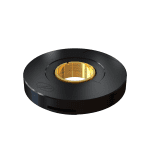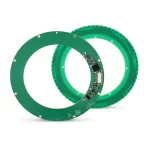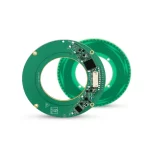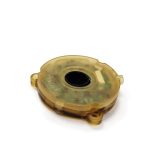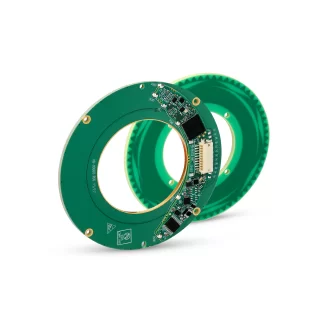
Part no.: Netzer VLP-80
• 80mm diameter
• SSI, BiSS-C
• Up to 21 bits resolution
• High tolerance to EMI, RFI and magnetic fields
Netzer VLP encoders are ideal for a wide variety of applications such as medical robots, defense and gimbals in vision systems. Featuring an open frame, 2 plate design, the sensor is lightweight, highly tolerant to temperature, shock, EMI, RFI and magnetic fields. It offers a unique combination of high performance at an economical cost.
"*" indicates required fields

Netzer
Netzer
Netzer
Netzer
Improved Encoder Accuracy Brings Hidden Benefits
Capacitive rotary encoders such as those from Netzer Precision are known for their low profile, high noise immunity and excellent accuracy. As a result, they are an excellent choice for applications such as camera systems, radar, slip-rings and robotic joints. Often times in these tasks the encoder is used for velocity feedback, ensuring a smooth […]
What semiconductors, snacking and gambling all have in common: Encoders!
There has been a lot of talk lately around the global ‘chip’ shortage. Even social media last month was filled with cartoons of engineers asking Santa for semiconductors for Christmas. Rotary encoders such as the DS-130 by Netzer Precision are an important part of this ‘chip’ production. Accuracies exceeding 0.004 degrees, 21 bit resolution and a 90mm ID ensure that component placement can be done accurately and consistently.
Application Note: Ethernet Protocols for Industrial Automation Sensors
Industrial Ethernet protocols are playing a growing role in automation, as they offer a number of advantages over traditional fieldbus protocols such as CANopen and PROFIBUS. Industrial Ethernet protocols are based on standard Ethernet technology, which provides a number of benefits, including:
Intrinsically Safe Absolute Rotary Encoders
In the most hazardous environments, where an explosive atmosphere consisting of flammable gas or vapor is regularly present and a sensor fault cannot be risked, Intrinsically Safe (IS) sensors may be the best sensing option. Generally, these sensors are paired with a barrier which limits the amount of electrical and thermal energy that can enter the Hazardous Area to an amount that is so small that even in the situation of a sensor fault, there is not enough energy to cause an ignition.