Positek

G603

Part no.: G603

Key Features

• Single axis

• Voltage or Current interface

• IP67

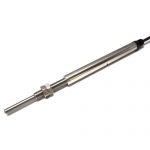
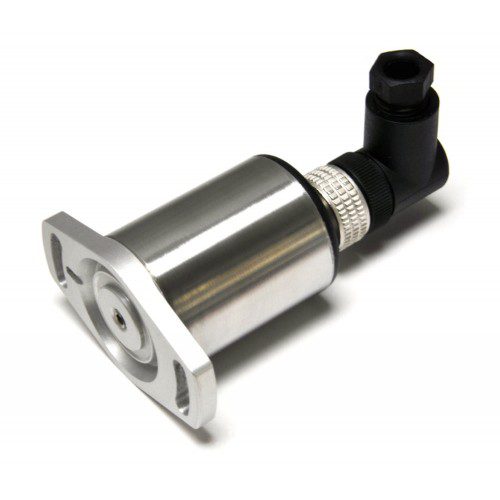
Intrinsically safe G603 is CSA approved for use in potentially explosive gas/vapour atmospheres. The G603 is designed for industrial and scientific feedback applications and is ideal for OEMs seeking good sensor performance for arduous applications in hazardous areas.

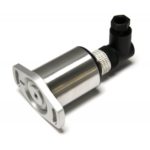
The G603, like all Positek® sensors, is supplied with the output calibrated to the angle required by the customer, between 15 and 160 degrees and with full EMC protection built in. The sensor provides a linear output characteristic with angle of deflection. There is a machined registration mark to identify the calibrated mid point.

Overall performance, repeatability and stability are outstanding over a wide temperature range. Electrical connections to the sensor are made via an industrial standard 4-pin M12 connector, with limited rotational capability to facilitate cable routing.

The sensor has a rugged stainless steel body. The flange has two 4.5mm by 30 degree wide slots on a 48mm pitch to simplify mounting and position adjustment. Environmental sealing is to IP67.

Positek intrinsically safe sensors are designed to be used with a galvanically isolated amplifier . Approved galvanic isolation amplifiers (G005) are available from Positek; there is a choice of 0.5-9.5V or 4-20mA transmission outputs.

The sensor can be installed with a cable length up to 1km between the sensor and the amplifier.

Call us for more info at 856-727-9500

"*" indicates required fields
Hi, My name is

and I’m interested in the

You can reach me by email at

or phone at

Message

This field is for validation purposes and should be left unchanged.
You may also be interested in:

Positek

X111

  • ATEX/IECEx approved to: Ex II 1G : Ex ia IIC T4 GA (Ta = -40°C to +80°C)
  • Sensor Mounting: M8 Rod Eyes, Body Clamps or M8 ThreadsSpring loaded pushrod option available
  • Available in any measurement range from 0-5mm to 0-800mm
  • Sealed to IP65/67 depending on connector/cable option

Positek

H111

  • CSA approved to: Class I, Zone 0
  • Sensor Mounting: M8 Rod Eyes, Body Clamps or M8 ThreadsSpring loaded pushrod option available
  • Available in any measurement range from 0-5mm to 0-800mm
  • Sealed to IP65/67 depending on connector/cable option

Positek

X112

  • ATEX/IECEx approved to: Ex II 1G : Ex ia IIC T4 GA (Ta = -40°C to +80°C)
  • Sensor Mounting: 1/2" UNF ThreadSpring loaded plunger
  • Available in any measurement range from 0-5mm to 0-50mm
  • Sealed to IP67

Positek

X603

  • Single axis
  • Up to 160°
  • Voltage or Current interface
  • IP67
Blog:

Celera Motion Unveils New Ultra-Lightweight Inductive Encoder

BEDFORD, Mass. (Nov. 14, 2023) — Celera Motion, an award-winning business unit of Novanta Inc., announced today a new version of its popular ultra-lightweight IncOder CORE inductive encoder series.

SSI Hardware

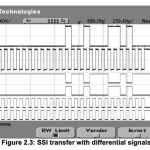
SSI hardware is fairly simple. Just use any RS-422 transceiver to generate the differential signals from/to the microcontroller port pins. Keep reading to learn about the different implementations of SSI hardware.

Inductosyn: End of an Era, New Opportunities or Both?

Recently, obtaining the Inductosyn and components for maintenance has become more difficult. For decades the Inductosyn from Farrand Controls / Ruhle Companies sat near the top of the rotary sensor hierarchy. Providing sub 2 arcsec (0.5 mdeg) accuracies, it combined the robustness of a resolver with the performance of the best optical encoders. Despite its shortcomings, it found plenty of customers, from airborne infrared and radar systems, to telescopes, satellite communication antennae (SATCOM), machine tooling and low-pressure vacuum chambers.

Why Holistic Encoders are More Accurate

All absolute rotary encoders have a rotor which is attached to the rotating shaft and a stator which is attached to the housing holding the shaft. The interaction of these two components produces a measure of the shafts rotational angle. The most important parameters of absolute rotary sensors are resolution, accuracy and tolerance to misalignment of the rotational axes.